
AD
For as long as I can remember, eight hours of sleep has been held up as the gold standard. As a teenager, I took that advice seriously, happily sleeping eight hours and then some whenever I could. But adulthood has a funny way of messing with even the best intentions. Between work deadlines, social plans, early morning workouts, and the occasional Netflix binge that somehow turns into a 2 a.m. bedtime, my sleep schedule has become more of a suggestion than a routine. My approach? Get four or five hours during the week, then make up for it by sleeping in on the weekends. Surely, it all evens out in the end, right?
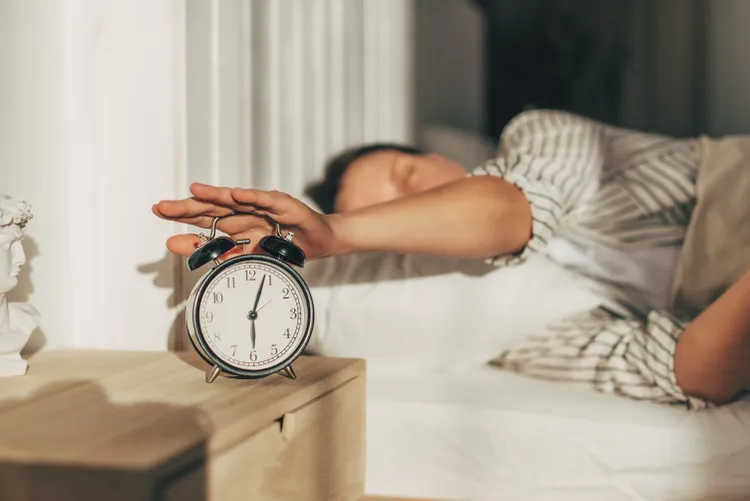
Well, not exactly. While getting enough sleep is undeniably important, I recently learned that when you sleep and how consistently you stick to a schedule may matter more than duration. Our bodies rely on an internal clock, known as our circadian rhythm, that helps regulate everything from sleepiness and alertness to other essential bodily functions. When bedtime and wake-up time swing wildly from one day to the next, that internal clock can get thrown off, even if you manage to squeeze in enough total hours over the course of the week. In other words, my weekend sleep-ins might help me feel a little more human after a hectic week, but they aren't necessarily making up for an inconsistent routine.
And when it comes to long-term health, that distinction could be more important than we once realised. Sleep researchers are increasingly examining how regular sleep patterns relate to overall health and longevity, alongside the familiar recommendation to get enough hours each night. So, if you're someone who treats your weekday bedtime as a moving target, read on for why sleep consistency may matter more than you think, how it could affect your long-term health, and expert-approved ways to build a sleep routine that works with your actual life.
What does a consistent sleep schedule look like?
If your sleep routine currently consists of going to bed whenever you finally finish answering emails or scrolling TikTok until your eyes physically refuse to stay open, you're not alone. But a consistent sleep schedule doesn't mean following a rigid bedtime down to the minute. According to Justin Hai, co-founder and CEO of Rebalance Health and the author of STRESS NATION, the goal is to go to bed and wake up at roughly the same times each day, as your schedule allows, while still getting enough rest. Our bodies thrive on predictability, he explains, because our internal biological clocks help coordinate everything from hormone production to metabolism and cellular repair. That means consistency is about establishing a rhythm your body can rely on, not hitting an exact bedtime every single night.
Ideally, most adults should aim for seven to nine hours of sleep each night while keeping their sleep and wake times relatively steady, including on weekends. If you occasionally stay up late for dinner with friends or a particularly good Netflix binge, there's no need to panic or abandon your routine altogether. Hai emphasises that the goal isn't perfection, and you shouldn't sacrifice adequate rest just to maintain a rigid schedule. Instead, focus on creating a routine that feels sustainable in real life, not one that falls apart the second you have evening plans.
Why consistent sleep matters more than duration
We've become pretty obsessed with counting our hours of sleep, whether we're checking our smartwatch first thing in the morning or celebrating a particularly impressive sleep score. But Hai says we often overlook something equally important: when we sleep. In fact, he points to recent research that found sleep regularity was a stronger predictor of mortality risk than sleep duration alone. That doesn't mean you can suddenly get away with five hours a night just because you go to bed at the same time every evening. As Hai clarifies, consistency deserves a seat at the table alongside duration and quality. In other words, getting enough sleep still matters, but so does giving your body a predictable schedule for getting it.
The reason comes down to your circadian rhythm. As Hai explains, our circadian rhythm helps determine when we feel alert, when we become sleepy, when hormones are released, and how efficiently our bodies process energy. When bedtime and wake-up times constantly shift, we can create a kind of internal misalignment known as social jet lag, where our schedules and biological clocks aren't in sync. Cortisol naturally rises toward morning to help us wake up, while melatonin signals that it's time to prepare for sleep. Irregular schedules can disrupt the timing of those signals. Over time, irregular sleep has been associated with increased cardiovascular and metabolic health risks, including issues with blood pressure and glucose regulation. Sleep isn't simply downtime, Hai says. It's when an extraordinary amount of biological housekeeping takes place. And unfortunately, sleeping in on Saturday can't necessarily undo every late night from the week before.
Realistic ways to build a more consistent sleep routine
Start with your wake-up time. If choosing a consistent bedtime feels impossible with your schedule, Hai recommends establishing a reasonably consistent wake-up time whenever your schedule permits. Getting daylight in the morning can also help synchronise your biological clock, making it easier for your body to recognise when it's time to feel alert and when to wind down later. You don't have to become someone who wakes up at 5 a.m. to make this work. Start with a wake-up time that fits your actual life and build from there.
Give yourself a wind-down window. Rather than going straight from answering work emails to expecting your brain to fall asleep on command, try creating a simple 30-minute bedtime routine. Dimming the lights, putting your phone away, and giving your brain time to transition out of the constant stimulation of the day is one effective way to wind down, Hai says. That might mean reading a few chapters, taking a warm shower, or listening to music instead of scrolling through videos. Your inbox will survive without you for another eight hours, Hai says.
Pay attention to caffeine and screens. Your late-afternoon coffee or nightly phone habit might be interfering with your sleep more than you realise. Hai recommends being mindful of caffeine and late-night screen exposure, since both can disrupt sleep even when you don't immediately notice the effects. You don't necessarily need to ban your favourite evening activities, but experimenting with an earlier caffeine cutoff and putting your phone away before bed can help you figure out what works for you.
Don't stress about consistency too much. Here's your reminder that a sleep routine shouldn't become another wellness rule to stress over. If a late night means choosing between getting enough rest and waking up at your usual time no matter what, Hai advises prioritising sufficient sleep and returning to your regular routine when you can. Ultimately, the most sustainable approach isn't some elaborate sleep optimisation programme requiring twelve gadgets, three subscriptions, and a spreadsheet. It's a handful of simple habits practised consistently, he says. And honestly, that's a sleep goal I can get behind.
The bottom line
Getting enough sleep matters, but so does when you sleep. A consistent sleep schedule helps keep your circadian rhythm in sync, which in turn supports hormone regulation, metabolism, cardiovascular health and more. You don't need a perfect routine to benefit. Start with a steady wake-up time, build a simple wind-down window, watch your caffeine and screen habits, and prioritise rest over rigidity. Small, sustainable habits practised consistently are the real key to better sleep and long-term health.


Germany on High Alert After Rare Foot-and-Mouth Disease Outbreak in Water Buffalo
HAMBURG — German officials breathed a cautious sigh of relief this week as extensive testing revealed no additional cases of foot-and-mouth disease following last week's alarming discovery - the country's first outbreak in decades among a herd of water buffalo near Berlin.

US Records First Fatal Human Case of H5N1 Bird Flu in Louisiana
Health officials in Louisiana confirmed the nation's first human fatality linked to H5N1 avian influenza on Monday (Jan 6), raising concerns about the virus's potential severity despite assurances of low public risk.

China Shares Extensive COVID-19 Research Data with Global Community, Says Foreign Ministry
BEIJING — China has been at the forefront of sharing critical COVID-19 data and research findings with the international community, according to a statement from the Chinese foreign ministry on Tuesday (Dec 31). The announcement comes in response to renewed calls from the World Health Organisation (WHO) for greater transparency and access to information regarding the origins of the virus.

Extended Breastfeeding May Lower Mothers’ Risk of Heart Disease and Stroke, Study Shows
Breastfeeding is widely recognised for its benefits to infants, providing essential nutrition and immunity. However, a recent study indicates that longer lactation may also offer significant cardiovascular benefits for mothers, reducing the risk of coronary artery disease (CAD) and stroke before the age of 70.The Study and Its ApproachResearchers examined data from the Copenhagen Perinatal Cohort, which included 6,857 mothers who gave birth between 1959 and 1961. The women were followed for over

Experts Reveal the Smartest Ways to Boost Your Metabolism and Keep It High All Day
Many people wonder why some individuals seem to burn energy effortlessly while others struggle, even with disciplined eating and regular exercise. The difference often comes down to metabolism — the complex internal system responsible for turning food into energy, supporting cell repair, and maintaining hormonal balance. The encouraging news is that your metabolism isn’t fixed. According to specialists, it can be improved at any stage of life with the right habits.Two medical experts — New York–

Singapore Investigates 8 Telemedicine Providers Over Clinical and Advertising Violations
SINGAPORE – Authorities are cracking down on telemedicine providers failing to meet healthcare standards, with eight companies currently under scrutiny for clinical care lapses or misleading service promotions, revealed Senior Minister of State for Health Janil Puthucheary during a January 7 parliamentary session.

China Expands Mental Health Services to Tackle Rising Cases Among Youth
HONG KONG — In response to growing mental health challenges, particularly among children and teenagers, China's National Health Commission (NHC) has unveiled a new initiative to strengthen mental health services nationwide from 2026 to 2027.

Obesity Is Rising in Singapore — And It's About More Than Just Overeating
Obesity is becoming an increasingly pressing health issue in Singapore. Recent findings from the National Population Health Survey show a rising trend in obesity among adults aged 18 to 74. Adding to the concern, the World Obesity Federation has ranked Singapore third among Asian countries for adult obesity rates.

Health Screening in Singapore (2026): How Much It Really Costs & Where to Go
We all know how crucial health screenings are—spotting potential health issues early can save you from high medical bills and serious complications down the line. But when it comes to the cost of these screenings in Singapore, things aren’t always straightforward.

Global Immunization Progress and Challenges in 2024
In 2024, new data from the World Health Organization (WHO) revealed that a million more children completed the crucial three-dose vaccination against diseases like diphtheria, tetanus, and whooping cough compared to the previous year.

Local Zika Cases Confirmed in Singapore
On June 19, the National Environment Agency (NEA) and the Communicable Diseases Agency (CDA) announced that two local Zika cases have been confirmed at Woodlands Street 11 and Street 32.

Everyday Chemicals May Disrupt Gut Health, New Study Warns — What Singapore Residents Should Know
A growing body of research continues to highlight the importance of maintaining a healthy gut, yet a new analysis from the United Kingdom suggests that certain everyday chemicals may quietly be undermining this vital system. While gut wellness has become a popular topic in recent years, scientists say there may be more unseen influences affecting our digestive environment than previously understood.


