
AD
You've noticed a few varicose veins on your legs. Is there anything you can do about them? Varicose veins are hard to ignore: these lumpy, ropelike vessels seem to bulge out of the skin, and for many people, they can be deeply uncomfortable. They are most common in the legs, ankles and feet but can sometimes be found in the pelvis and elsewhere. While up to 30 per cent of adults have varicose veins, they are "not life threatening or limb threatening," said Dr Faisal Aziz, chief of vascular surgery at Penn State Health. A few simple lifestyle changes can ease symptoms and keep the veins from worsening, but they usually won't make existing ones disappear.
What Causes Varicose Veins?
Arteries carry blood away from the heart, and veins bring it back. But that's a tougher job in the legs, where blood has to travel upward. Your body relies on a two-part system: as you move around, your calf muscles squeeze the veins in your legs and push blood upward, while one-way valves keep that blood from travelling back down, said Dr Isabella Kuo, a vascular surgeon at University of California Irvine Medical Center.
Varicose veins form when these valves weaken or don't close properly. Blood pools in the legs and pressure builds, causing the veins to enlarge. Family history is the strongest risk factor, but ageing, excess weight and jobs that require long stretches of sitting or standing also increase the odds. Women are more likely to develop varicose veins too, and while the reasons are not fully clear, hormone replacement therapy and pregnancy probably play a role.
Because many of these risk factors are beyond a person's control, there is not much people can do to prevent varicose veins. But staying active, maintaining a healthy weight and taking breaks from long sedentary periods can help reduce strain.
Are Varicose Veins Dangerous?
If varicose veins aren't painful or bothersome, it's perfectly fine to ignore them, said Dr Angela Kokkosis, director of the centre for vein care at Stony Brook Medicine. However, many cases are symptomatic and worth getting checked out.
As blood pools in the veins, it can cause pain, tenderness and a feeling of heaviness in the legs. If the pressure stays elevated, fluid and red blood cells can seep into nearby tissue, causing swelling, itchy dry skin, and discoloration. In rare cases, varicose veins can lead to ulcers, particularly without treatment.
Varicose veins are also tied to a higher risk of deep vein thrombosis, a potentially dangerous blood clot. So, sudden swelling or pain in just one leg – especially after a long sedentary stretch, like a long flight – deserves prompt attention.
What Can You Do About Varicose Veins?
Varicose veins can't be cured, but doctors recommend starting with some simple changes to help slow their progression.
Movement is key. Taking a short walk or flexing your feet at your desk – at least every hour – can help keep your calf muscles engaged. When sitting or lying down, elevating your legs for about 15 minutes at a time can also help reduce blood pooling.
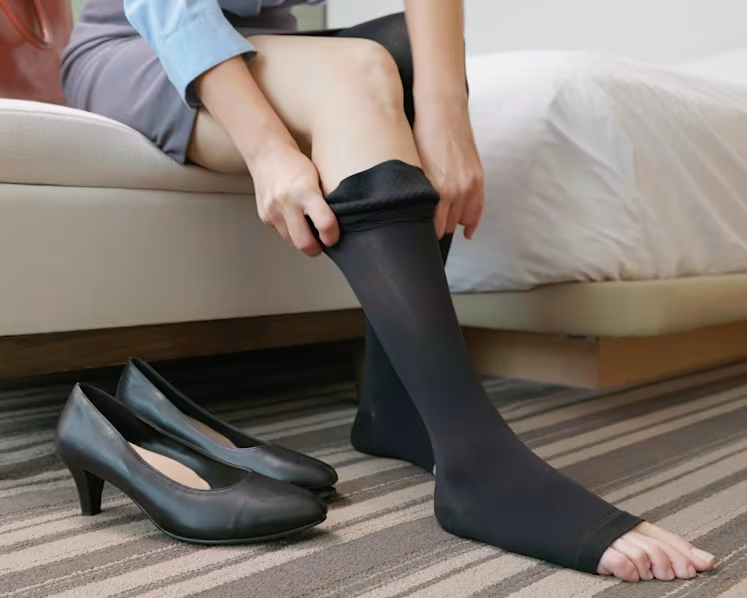
Compression stockings are one of the best tools for symptom relief. They apply external pressure to the legs, helping counteract gravity and reduce blood pooling. Knee-high stockings with moderate compression typically work well. If you have trouble wearing them every day, at least do so on days when you'll be sitting or standing for long stretches.
There are no over-the-counter medications approved for treating varicose veins. However, some studies suggest that supplements like micronised purified flavonoid fraction and horse chestnut seed extract can ease leg pain, heaviness and swelling, though they're not a replacement for lifestyle changes.
When to See a Specialist
If you're dealing with pain and other symptoms after three to six months, or you develop complications like skin discoloration or ulcers, it's worth talking to a vein specialist. After ruling out related problems, the doctor can close the problematic veins with heat, adhesive or a medical solution – or surgically remove them. This can both improve the cosmetic appearance of varicose veins and meaningfully improve heaviness and aching.
Final Thoughts
Varicose veins are a chronic condition. Treated veins can occasionally reopen, and an operation doesn't erase the body's tendency to form new varicose veins down the road. While there is no cure, a combination of lifestyle changes, compression stockings, and medical treatment can effectively manage symptoms and improve quality of life. If you're concerned about your varicose veins, speak to a healthcare professional for personalised advice.


Singapore Investigates 8 Telemedicine Providers Over Clinical and Advertising Violations
SINGAPORE – Authorities are cracking down on telemedicine providers failing to meet healthcare standards, with eight companies currently under scrutiny for clinical care lapses or misleading service promotions, revealed Senior Minister of State for Health Janil Puthucheary during a January 7 parliamentary session.

China Expands Mental Health Services to Tackle Rising Cases Among Youth
HONG KONG — In response to growing mental health challenges, particularly among children and teenagers, China's National Health Commission (NHC) has unveiled a new initiative to strengthen mental health services nationwide from 2026 to 2027.

China Shares Extensive COVID-19 Research Data with Global Community, Says Foreign Ministry
BEIJING — China has been at the forefront of sharing critical COVID-19 data and research findings with the international community, according to a statement from the Chinese foreign ministry on Tuesday (Dec 31). The announcement comes in response to renewed calls from the World Health Organisation (WHO) for greater transparency and access to information regarding the origins of the virus.

Preparing for Your First Hyrox Event: Dos and Don'ts
Are you planning to participate in your first Hyrox event or considering it in the near future?

Local Zika Cases Confirmed in Singapore
On June 19, the National Environment Agency (NEA) and the Communicable Diseases Agency (CDA) announced that two local Zika cases have been confirmed at Woodlands Street 11 and Street 32.

US HIV/AIDS Aid Program Faces Uncertainty After Abortion Policy Violation in Mozambique
WASHINGTON — A major US-funded global health initiative is under scrutiny following revelations that healthcare workers in Mozambique violated program guidelines by performing abortions, sparking concerns about the future of the multibillion-dollar effort credited with saving millions of lives worldwide.

Global Health Experts Urge Stronger Action Against Bird Flu After First US Fatality
PARIS — The World Organisation for Animal Health (WOAH) issued an urgent warning on Wednesday (Jan 8), calling for intensified efforts to curb the spread of bird flu among animals following the first reported human death from the virus in the United States. Experts emphasize that proactive measures are crucial to prevent further human infections.

US Records First Fatal Human Case of H5N1 Bird Flu in Louisiana
Health officials in Louisiana confirmed the nation's first human fatality linked to H5N1 avian influenza on Monday (Jan 6), raising concerns about the virus's potential severity despite assurances of low public risk.

China Unveils National Strategy to Combat Rising Dementia Crisis Amid Aging Population Boom
HONG KONG — In a bold move to address one of its most pressing healthcare challenges, China has rolled out an ambitious nationwide initiative targeting dementia – now officially recognized as a critical public health issue threatening millions of families across the nation.

Obesity Is Rising in Singapore — And It's About More Than Just Overeating
Obesity is becoming an increasingly pressing health issue in Singapore. Recent findings from the National Population Health Survey show a rising trend in obesity among adults aged 18 to 74. Adding to the concern, the World Obesity Federation has ranked Singapore third among Asian countries for adult obesity rates.

Global Immunization Progress and Challenges in 2024
In 2024, new data from the World Health Organization (WHO) revealed that a million more children completed the crucial three-dose vaccination against diseases like diphtheria, tetanus, and whooping cough compared to the previous year.

Paternal Postpartum Depression: Understanding and Addressing a Father's Mental Health
Postpartum depression (PPD) is often associated with mothers, but did you know that it can also affect fathers?


